

Why Canadian Sociology Programs Are Reshaping How We Teach Humanity
Sociology stands as a singular discipline committed to understanding how human beings organize, interact, and create meaning within collective life. At its core, the field examines social structures, institutions, cultural patterns, and power relations through systematic inquiry and empirical observation. Canadian universities have cultivated sociology as a distinct intellectual tradition since the early twentieth century, positioning it alongside but separate from related disciplines like anthropology, political science, and economics within the broader humanities and social sciences framework.
What distinguishes sociology from neighboring fields is its fundamental concern with the social as an autonomous domain worthy of investigation. While historians trace change over time and political scientists analyze governance, sociologists ask how social forces shape individual experience and how collective action produces enduring patterns. This focus demands methodological versatility. Quantitative researchers deploy survey instruments and statistical modeling to map inequality, mobility, and demographic shifts. Qualitative scholars conduct interviews, ethnographies, and discourse analysis to capture lived experience and cultural production. Both approaches share a commitment to evidence-based claims about social reality.
The Canadian sociological tradition has evolved distinct characteristics. Shaped by bilingualism, regional diversity, and proximity to American intellectual currents while maintaining European theoretical connections, particularly with France, Canadian sociology has produced influential work on multiculturalism, Indigenous-settler relations, and global migration. Universities across the country offer undergraduate and graduate programs that balance classical theory with contemporary debates, equipping students to analyze pressing social questions from urban segregation to digital surveillance.
Understanding sociology as a unified yet diverse discipline requires recognizing its dual heritage. Drawing from Enlightenment rationalism and critical social movements alike, the field simultaneously upholds scientific rigor and maintains skepticism toward claims of objectivity, creating productive tension that continues to generate new knowledge about collective life.
The Distinctive Identity of Sociology in Canadian Academia
Institutional Frameworks and Departmental Organization
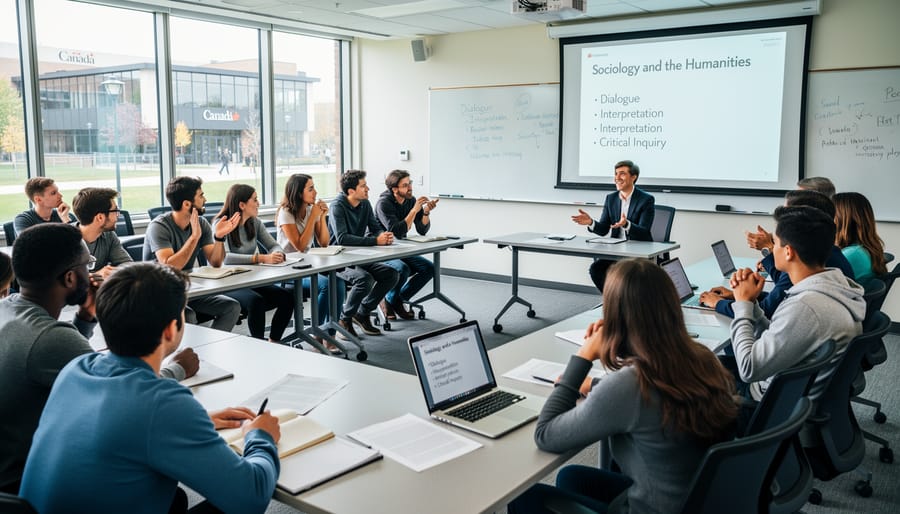
Canadian universities organize sociology through diverse departmental models reflecting institutional priorities and regional traditions. Standalone sociology departments remain common at larger research universities like the University of Toronto and McGill University, where program size justifies dedicated faculty and resources. Smaller institutions often cluster sociology with complementary disciplines, pairing it with anthropology creates combined departments that capitalize on methodological overlap and shared theoretical foundations in studying human societies.
The disciplinary classification question of Is sociology humanities or social science manifests differently across Canadian institutions. Anglophone universities typically house sociology within social science faculties alongside economics and political science, emphasizing empirical research methods and quantitative analysis. Francophone institutions, particularly in Quebec, more frequently position sociology within humanities faculties or interdisciplinary structures that bridge both domains, reflecting continental European academic traditions where the human sciences occupy a distinctive category.
Departmental relationships with cultural studies, women’s and gender studies, and Indigenous studies vary considerably. Some programs maintain formal cross-appointments, allowing faculty to contribute to multiple curricula. Others establish joint degree programs or collaborative research centres that institutionalize connections between sociology and adjacent fields. These structural arrangements shape student experiences, determining course availability, research supervision options, and opportunities for interdisciplinary engagement that characterize contemporary Canadian sociology education.
Sociology’s Dual Character: Science and Interpretation

Sociology’s methodological toolkit reflects an inherent tension that enriches rather than weakens the discipline. Canadian sociology programs teach students to navigate between empirical measurement and interpretive understanding, recognizing that human social life demands both statistical patterns and meaningful narratives.
At universities across Canada, introductory courses typically expose students to quantitative methods, surveys, regression analysis, demographic modeling, that mirror natural science approaches. Students learn to construct representative samples, test hypotheses, and identify correlations in large datasets. These skills align sociology with economics and political science, positioning it firmly within social science faculties.
Yet the same programs simultaneously emphasize ethnographic observation, in-depth interviews, discourse analysis, and phenomenological interpretation. These qualitative methods, borrowed from anthropology and literary criticism, treat social phenomena as texts requiring careful reading rather than variables awaiting measurement. A student might analyze census data on immigration patterns one week, then conduct narrative interviews with newcomers the next.
This methodological pluralism directly shapes how Canadian universities structure their sociology curricula. Most programs require coursework in both quantitative and qualitative research methods, often mandating separate courses for each tradition. Upper-year seminars frequently pair theoretical readings with hands-on methodological training, pushing students to match research questions with appropriate tools rather than defaulting to a single approach.
The dual character presents pedagogical challenges. Instructors must help students understand that methodological choice isn’t arbitrary but stems from epistemological commitments about what constitutes valid knowledge of social reality.
Curriculum Evolution and Pedagogical Innovations in 2026
Core Competencies and Learning Objectives
Canadian sociology programs structure their curricula around four foundational competencies that prepare students for diverse intellectual and professional pursuits. Critical thinking forms the core, training students to question assumptions, recognize power structures, and analyze social phenomena from multiple perspectives. Students learn to move beyond surface-level explanations, examining how race, class, gender, and other social categories shape individual experiences and institutional patterns.
Research methodology instruction typically begins with qualitative approaches, ethnography, interviews, content analysis, before advancing to quantitative methods including statistical analysis and survey design. By third year, most programs require students to complete original research projects, applying theoretical concepts to empirical questions. This hands-on training develops both analytical rigor and practical data skills increasingly valued across employment sectors.
Theoretical frameworks receive substantial attention throughout degree programs. Students encounter classical thinkers like Durkheim and Weber alongside contemporary theorists addressing globalization, digital culture, and environmental justice. Francophone programs often emphasize Bourdieu, Foucault, and other French sociological traditions more prominently than their anglophone counterparts.
Applied competencies bridge academic learning and career preparation. Programs emphasize written communication, presentation skills, collaborative problem-solving, and ethical reasoning. These transferable abilities serve graduates entering policy analysis, community development, human resources, market research, or graduate studies. Canadian institutions increasingly highlight how sociological training cultivates adaptability, the capacity to understand rapidly changing social contexts and contribute meaningfully to organizational decision-making.
Integration of Contemporary Social Issues
Canadian sociology programs have moved beyond passive observation of social change to active engagement with the most pressing challenges facing contemporary society. Rather than treating these issues as occasional case studies, departments across the country have fundamentally restructured their curricula to position students as critical analysts of climate disruption, multicultural tensions, Indigenous rights movements, and systemic inequalities.
At the University of British Columbia, the sociology department now requires all undergraduate students to complete at least one course explicitly addressing environmental sociology or climate justice, reflecting the urgency of ecological crises in coastal British Columbia. These courses don’t simply catalogue problems; they examine power structures that perpetuate environmental degradation and explore community-led resistance strategies. Students analyze how the 7 cultural dimensions shape different societies’ responses to climate change, connecting Hofstede’s framework to environmental policy outcomes across cultures.
| Institution | Required Theme Integration | Pedagogical Approach |
|---|---|---|
| University of Toronto | Multiculturalism & Migration | Community partnerships with immigrant organizations |
| University of British Columbia | Climate Justice | Mandatory environmental sociology course |
| University of Saskatchewan | Indigenous-Settler Relations | Indigenous pedagogy integration, Elder partnerships |
| York University | Gender & Intersectionality | Feminist methodologies across core curriculum |
The University of Saskatchewan has pioneered the integration of Indigenous sociological perspectives throughout its program, not as add-on content but as foundational frameworks. Students learn Cree concepts of relationality alongside Western sociological theory, and courses on colonialism feature Indigenous scholars as primary authorities. York University similarly embeds intersectional feminist analysis across its curriculum, requiring students to examine how race, class, gender, and sexuality shape social structures in every core theory and methods course, not just specialized electives.
The Canada-France Connection: Francophone Sociology’s Influence

Francophone Sociology Programs in Canada
Francophone sociology programs in Canada reflect a distinct intellectual tradition shaped by Quebec’s sociological heritage and ongoing engagement with French theoretical frameworks. At Université de Montréal, the Department of Sociology has cultivated a strong tradition in cultural sociology and social movements research, drawing heavily on Bourdieusian theory and critical approaches to power relations. The program emphasizes reflexive methodology and qualitative research traditions, training students to examine how symbolic systems structure social inequalities.
Université Laval’s sociology program maintains particular strengths in demographic analysis and family sociology, combining quantitative rigor with interpretive depth. Faculty research frequently engages with Francophone theorists such as Alain Touraine and Edgar Morin, fostering analytical frameworks that differ from predominantly Anglo-American approaches found elsewhere in Canada. Students encounter extensive coverage of European social theory alongside North American empirical traditions, creating graduates fluent in multiple sociological languages.
At Université d’Ottawa, the bilingual context produces unique pedagogical challenges and opportunities. The francophone sociology program balances Quebec’s intellectual traditions with exposure to Anglophone scholarship, preparing students to navigate both linguistic communities. Course offerings frequently address minority rights, linguistic politics, and cultural identity, topics resonating with Ottawa’s position as Canada’s bilingual capital.
These institutions share commitment to critical sociology that questions power structures while maintaining methodological pluralism. Their graduates often pursue research careers examining francophone identity, social policy in Quebec, or comparative analyses of welfare states, contributing distinctive perspectives to Canadian sociology’s broader landscape.
Transatlantic Research Collaborations and Exchange Programs
Formal partnerships between Canadian and French universities create robust pathways for sociological research and knowledge exchange. Agreements such as those between Université de Montréal and Sciences Po Paris or the University of Toronto and École des Hautes Études en Sciences Sociales facilitate faculty exchanges, collaborative research projects, and shared publication initiatives. These partnerships enable Canadian sociologists to access French archival resources, participate in European research networks, and co-author studies examining comparative social phenomena across both societies.
Student mobility programs represent a cornerstone of transatlantic collaboration, with hundreds of sociology students annually participating in semester or year-long exchanges. Quebec’s existing linguistic and cultural ties with France ease this cultural exchange though anglophone institutions increasingly develop their own partnerships. Exchange students gain exposure to distinct theoretical traditions, alternative methodological training, and comparative perspectives on topics ranging from immigration policy to social inequality. Many return with enriched research questions that bridge Canadian and French sociological concerns.
Joint research initiatives funded through programs like the Canada-France Research Fund support collaborative studies on shared societal challenges. Recent projects have examined urban segregation patterns, evolving family structures, and responses to climate change across both nations. This cross-border collaboration produces co-authored publications in bilingual journals, strengthening both countries’ sociological scholarship while offering students valuable international research experience and professional networks that extend throughout their careers.
Research Priorities and Methodological Approaches
Quantitative and Mixed-Methods Research
Canadian sociology’s quantitative tradition draws heavily on national data infrastructure, particularly Statistics Canada’s census and longitudinal surveys. Programs at institutions such as the University of Toronto and the University of British Columbia train students in regression analysis, social network mapping, and demographic modeling using real datasets that capture migration patterns, income inequality, and family structures across provinces.
Mixed-methods designs have gained prominence since 2020, combining survey data with in-depth interviews or ethnographic observation to triangulate findings. A researcher might analyze national health survey statistics, then conduct qualitative fieldwork to understand how specific communities experience those patterns differently. This approach proves especially valuable when studying phenomena that quantitative measures alone can’t fully capture.
Computational methods are reshaping the field. Graduate programs now teach text analysis of social media data, spatial statistics for urban sociology, and machine learning applications for pattern detection in large administrative datasets. However, methodological training increasingly emphasizes ethical data use, particularly regarding privacy and the appropriate application of Indigenous research principles when working with First Nations, Métis, and Inuit data.
Qualitative and Interpretive Traditions
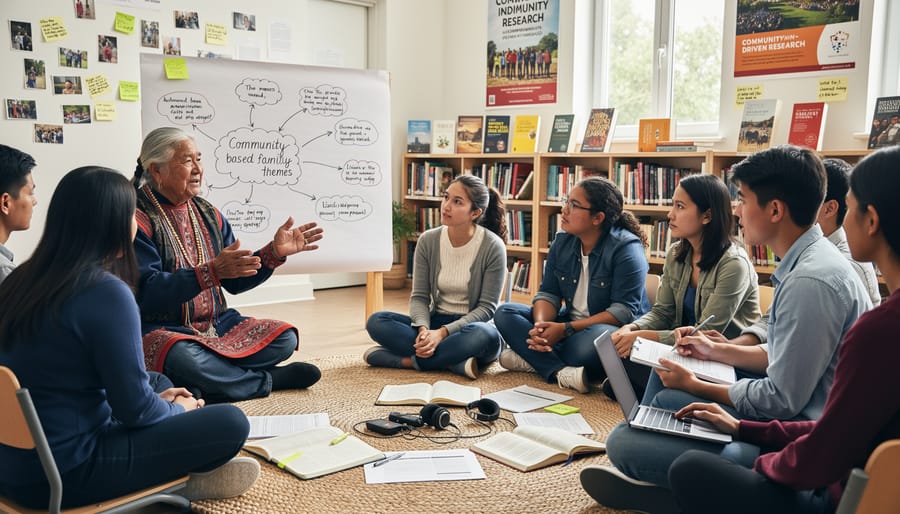
Ethnographic fieldwork remains fundamental to Canadian sociology, with researchers immersing themselves in communities to document social practices, symbolic meanings, and everyday interactions. This tradition draws heavily from the Chicago School’s legacy while incorporating contemporary reflexive approaches that acknowledge the researcher’s position and influence. Canadian sociologists conducting ethnographies in diverse settings, from Indigenous communities to urban immigrant neighbourhoods, prioritize extended engagement and participant observation, generating thick descriptions that reveal how people make sense of their worlds.
Narrative inquiry has gained prominence as researchers recognize how individuals construct identity and meaning through storytelling. This approach treats personal accounts not merely as data but as interpretive frameworks through which people organize experience and assert agency. Sociology programs increasingly teach students to conduct in-depth interviews that elicit life histories, paying attention to how narratives shift across contexts and audiences. The method proves particularly valuable when examining marginalized experiences that quantitative measures might obscure or simplify.
Phenomenological approaches complement these traditions by focusing on the structures of consciousness and lived experience. Canadian sociologists employing phenomenology examine how individuals perceive and interpret phenomena, from illness and grief to community belonging, seeking to understand the essential features of these experiences before applying theoretical frameworks. This interpretive stance contrasts with approaches that impose categories from the outset, instead allowing meanings to emerge from careful, systematic analysis of firsthand accounts.
Together, these qualitative traditions emphasize depth over breadth, context over generalization, and subjective meaning over objective measurement, enriching sociology’s capacity to capture human complexity.
Challenges and Opportunities Facing Sociology Education
Enrollment Patterns and Student Demographics
Canadian sociology programs have experienced fluctuating enrollment patterns over the past decade, with overall undergraduate registrations remaining stable while graduate programs show modest growth. Women continue to represent approximately 65-70% of sociology students across most Canadian institutions, though this varies by program type and level of study.
First-generation university students and those from immigrant backgrounds are disproportionately drawn to sociology compared to other humanities disciplines. This reflects the field’s practical orientation toward understanding social inequality, immigration, and multicultural dynamics, topics that resonate with lived experiences. Indigenous student enrollment has grown notably at institutions offering specialized courses in Indigenous sociologies and decolonial methodologies.
Geographic patterns reveal higher sociology enrollment in urban universities, where diverse student populations encounter the social dynamics that sociology examines. Francophone institutions in Quebec maintain robust enrollment partly due to the discipline’s strong intellectual tradition within French-Canadian academia.
Students cite several motivations for choosing sociology: genuine interest in social justice issues, perceived career versatility, and the discipline’s reputation for developing critical thinking skills. However, competition from applied programs like social work, criminology, and urban studies has redirected some prospective students who seek more explicitly vocational pathways. International students, particularly from Asia and Africa, constitute a growing segment, attracted by Canada’s multicultural research focus and relatively accessible graduate funding compared to other destinations.
Career Outcomes and Public Perception
Sociology graduates from Canadian universities pursue remarkably diverse career paths, though public understanding of these trajectories often lags behind reality. Recent data from Statistics Canada indicates that sociology degree holders demonstrate employment rates comparable to other social science and humanities graduates, with approximately 85% employed within two years of graduation. However, the dispersed nature of their career destinations, spanning government policy analysis, non-profit program management, human resources, market research, community development, and social services, creates visibility challenges that more professionally focused disciplines do not face.
The absence of a singular professional identity paradoxically constitutes both a strength and a communication obstacle. Sociology graduates develop transferable competencies highly valued across sectors: critical analysis, research design, data interpretation, stakeholder engagement, and cultural sensitivity. Yet when employers do not explicitly advertise positions as “for sociologists,” the discipline’s contributions become less recognizable to prospective students and their families weighing degree options.
Canadian institutions have responded with enhanced career support initiatives. Several universities now host dedicated career counselors for social sciences, organize alumni networking events showcasing diverse pathways, and collaborate with employers to articulate how sociological training addresses workplace needs. The Canadian Sociological Association has intensified public-facing communications highlighting sociology’s relevance to pressing issues like housing affordability, healthcare access, and workplace equity.
Francophone programs, particularly at Université de Montréal and Laval, emphasize applied sociology streams that directly connect coursework with professional contexts. These initiatives help bridge perception gaps while demonstrating sociology’s tangible societal value beyond academic research.
Future Directions: Sociology’s Role in Addressing Societal Complexity
Canadian sociology programs stand at a crucial juncture, preparing to meet societal challenges that demand precisely the analytical frameworks and critical perspectives the discipline cultivates. As automation reshapes labour markets, climate crises intensify migration patterns, and digital platforms reconfigure social interaction, sociology’s capacity to examine structural forces and their human consequences becomes increasingly vital.
Programs across Canada are already restructuring to embed technological literacy alongside traditional sociological competencies. Students now encounter data visualization tools, computational text analysis, and digital ethnography methods in their coursework. This isn’t merely about adopting new techniques, it reflects sociology’s recognition that understanding contemporary social life requires fluency with the technological systems mediating it. At the same time, sociology retains its humanistic core, ensuring students can interpret the meaning and power dynamics embedded in algorithmic decision-making or platform economies.
Emerging research priorities reflect this recalibration. Sociology departments are expanding their focus on climate justice, examining how environmental changes disproportionately affect marginalized communities and how social movements mobilize around sustainability. Indigenous methodologies and decolonial frameworks, once peripheral, now inform mainstream curriculum development, reshaping how students understand knowledge production itself. These shifts aren’t cosmetic additions, they represent fundamental reconsiderations of whose perspectives matter and what questions deserve investigation.
Institutional partnerships are evolving beyond traditional academic collaborations. Sociology programs increasingly work directly with community organizations, government agencies, and advocacy groups to conduct research that addresses immediate policy questions while maintaining scholarly rigor. Such partnerships create experiential learning opportunities for students and ensure research relevance extends beyond academic publications. The francophone-anglophone exchange continues to enrich these developments, with Quebec institutions often pioneering approaches to social policy analysis that later influence programs nationwide.
Graduate employability remains a central concern, pushing programs to articulate sociology’s applied value more clearly. Departments now emphasize transferable skills, research design, critical analysis, ethical reasoning, while offering specialized training in areas like program evaluation, organizational analysis, and policy consultation. The goal isn’t to abandon sociology’s theoretical foundations but to demonstrate how rigorous social analysis informs practical decision-making across sectors.
Canadian sociology programs stand at a compelling intersection, bridging rigorous social science methodology with the interpretive depth of humanities scholarship. This dual character equips students with analytical tools that extend far beyond academic contexts, preparing them to navigate the complexities of contemporary society with critical awareness and empirical grounding.
The discipline’s evolution within Canadian universities reflects broader shifts in how we understand social reality. From francophone institutions drawing on rich theoretical traditions rooted in French sociology to anglophone programs pioneering community-based research methodologies, Canadian sociology demonstrates remarkable adaptability. This diversity strengthens rather than fragments the field, creating a landscape where quantitative demographers work alongside ethnographers studying lived experience, each contributing essential perspectives to our collective understanding.
What distinguishes sociology in 2026 is not just its methodological flexibility but its commitment to addressing urgent social challenges. Programs integrating climate justice, reconciliation with Indigenous peoples, and multicultural citizenship into core curricula demonstrate that sociological education responds dynamically to the world students will inherit. These aren’t peripheral additions but fundamental reconceptualizations of what it means to teach humanity through the sociological lens.
For students contemplating this path, sociology offers more than theoretical knowledge. It cultivates a distinctive way of seeing, one that questions assumptions, reveals hidden structures, and connects personal experiences to broader patterns. In an era demanding critical thinking about inequality, technology, and social change, these skills prove indispensable.
The transatlantic exchanges between Canadian and French institutions further enrich this educational landscape, ensuring that Canadian sociology remains intellectually vibrant and globally connected while addressing distinctly Canadian concerns.