
What Are the “3 Cultures” in Cultural Exchange (and How Do They Shape Understanding)?
The “three cultures” framework describes a process of cultural interaction in which two distinct cultures engage to produce a third, emergent cultural form that transcends simple blending or assimilation. Rather than cultures A and B merging into a hybrid AB, the framework posits that their interaction generates culture C, a new system with its own logic, practices, and meanings that cannot be reduced to its origins. This concept has gained traction among scholars analyzing contexts where sustained cross-cultural exchange creates institutions, artistic movements, or social practices that belong fully to neither source culture.
Understanding this framework matters because it challenges persistent assumptions about how cultures interact. Popular discourse often frames cultural exchange as either dilution (the loss of authenticity) or fusion (a harmonious blend). The three cultures model offers a more sophisticated lens, one that recognizes the generative capacity of cultural contact. When French colonial administrators and Indigenous leaders negotiated governance structures in New France, for instance, they did not simply compromise between European and Indigenous systems. They created diplomatic protocols and trade relationships that operated according to new rules, intelligible to both parties but native to neither.
This framework proves particularly useful for analyzing the Canada-France relationship, where centuries of exchange have produced cultural forms that resist classification as purely Canadian or French. Québécois identity, Acadian cultural practices, and Franco-Canadian institutional structures exemplify this phenomenon. These are not French culture transplanted, nor are they Indigenous or Anglophone Canadian culture absorbed. They represent distinct formations that emerged from sustained interaction.
This article unpacks how the three cultures framework operates, identifies its core components, and demonstrates its application through case studies drawn from Canada-France cultural exchange.
What the “3 Cultures” Framework Means
The “3 cultures” framework describes the three distinct cultural layers that emerge when individuals or groups engage in sustained cross-cultural exchange: the source culture (heritage background), the host culture (receiving environment), and the emergent culture (new hybrid forms arising from their interaction). Unlike models that treat cultures as separate, static entities to be preserved or abandoned, this framework recognizes cultural identity as fundamentally dynamic, shaped by ongoing negotiation between multiple influences.
Developed in educational and migration studies during the late 20th century, the concept emerged from observations that immigrants, exchange students, and cross-cultural workers rarely fit neatly into either-or categories. Researchers noted that participants in cultural exchange didn’t simply choose between maintaining their original identity or adopting a new one. Instead, they created something more complex: synthesized practices, bicultural competencies, and transnational identities that drew from multiple sources while remaining distinct from any single tradition.
The framework rests on a critical insight: cultural systems don’t just coexist or collide, they generate new cultural possibilities through exchange. When a French student studies in Montreal or a Canadian researcher collaborates with colleagues in Paris, the resulting experience isn’t merely additive (French culture plus Canadian culture). It’s transformative, producing ways of thinking, communicating, and working that participants couldn’t access within a single cultural context.
- Cultural hybridity
- The blending of elements from multiple cultural traditions to create new practices, identities, or artistic forms that transcend their origins. This process challenges notions of cultural purity and acknowledges how exchange generates innovation.
- Transculturation
- The reciprocal influence and transformation that occurs when cultural groups interact over time, with each adopting and adapting elements from the other. Unlike acculturation, which implies one-directional change, transculturation recognizes mutual reshaping.
- Intercultural dialogue
- Active communication and meaning-making across cultural differences, characterized by openness, reciprocity, and genuine engagement rather than mere tolerance or surface-level exchange.
- Third space
- The conceptual and social location where individuals navigate between multiple cultural frames, developing fluid identities that resist fixed categorization. This space becomes a site of creativity and cultural innovation.
This conceptualization differs markedly from simple multiculturalism, which often emphasizes cultural diversity as separate communities coexisting within a shared geography. The “3 cultures” framework foregrounds interaction, adaptation, and synthesis rather than preservation of distinct boundaries. It aligns with broader cross-cultural frameworks, including the 7 cultural dimensions that help identify specific areas where cultural systems diverge or converge, but adds a temporal dimension: the recognition that exchange itself generates new cultural forms.
For scholars analyzing Canada-France relations, this framework offers a lens for understanding how centuries of contact have produced distinctive cultural phenomena, from Québécois identity to Franco-Canadian artistic movements, that can’t be reduced to either French or Canadian origins alone.
How the “3 Cultures” Framework Operates in Practice
The Role of Individual Agency
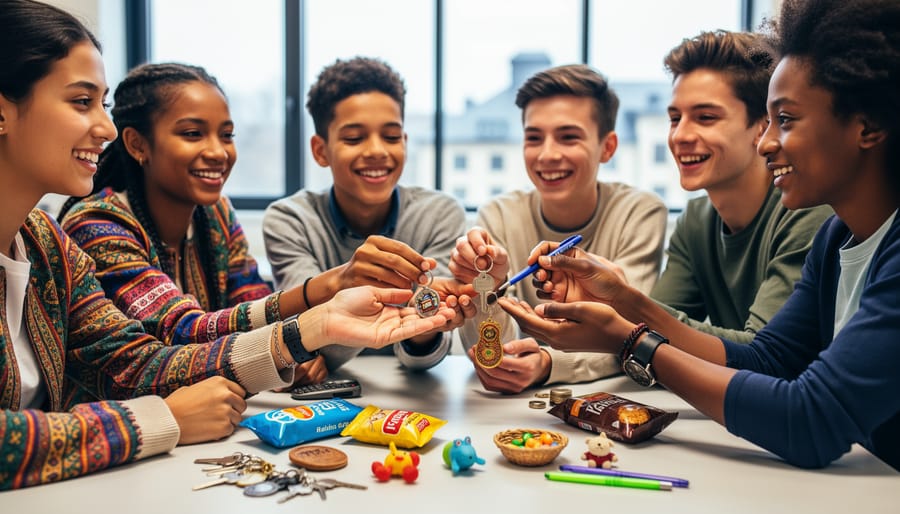
Individuals occupy the nexus where source, host, and emergent cultures collide and recombine. Rather than passive recipients of cultural influence, people actively select which aspects of their heritage to maintain, which elements of the host environment to adopt, and how to synthesize these into coherent identities. A Francophone student from Montreal studying in Paris, for instance, might preserve Quebec’s linguistic particularity while absorbing French academic conventions, ultimately developing a transatlantic scholarly identity that draws strategically from both traditions.
This selective navigation requires continuous negotiation. Individuals assess contexts, family gatherings versus professional settings, intimate friendships versus formal institutions, and adjust their cultural performance accordingly. They become what researchers term “cultural brokers,” translating meanings across systems and mediating misunderstandings that arise from divergent assumptions. A second-generation immigrant in Toronto might explain Canadian workplace norms to newly arrived French colleagues while simultaneously interpreting French communication styles for Canadian-born managers.
The agency involved extends beyond mere code-switching. Individuals create new cultural possibilities through their choices: a chef blending French technique with Indigenous Canadian ingredients doesn’t simply alternate between traditions but invents novel culinary expressions. These personal innovations, when shared and adopted by others, constitute the raw material of emergent culture. Individual agency thus transforms abstract cultural categories into lived, evolving realities that reshape the broader landscape of exchange.
Institutional Mediation
Educational institutions, cultural organizations, and governmental bodies serve as critical mediators in the “3 cultures” framework, shaping the conditions under which intercultural exchange unfolds. These structures determine which cultural practices gain legitimacy, what resources support exchange activities, and how power imbalances between source and host cultures are either challenged or reinforced.
Universities function as primary sites where the framework manifests tangibly. Through curriculum design, language requirements, and exchange program structures, institutions in both Canada and France establish parameters for cultural interaction. When Canadian higher education institutions mandate French language proficiency for certain programs, they create pathways for emergent cultural practices while simultaneously positioning French fluency as a form of cultural capital. Study abroad offices, international student services, and intercultural competence initiatives actively construct frameworks through which students experience and interpret cultural difference.
Cultural organizations, museums, heritage centres, arts councils, curate which aspects of source cultures receive public recognition and funding. Their programming choices signal which hybrid forms qualify as legitimate cultural expression versus which remain marginalized. Government immigration policies, citizenship requirements, and multiculturalism initiatives establish legal and social boundaries around cultural identity. Quebec’s distinct approach to interculturalism versus anglophone Canada’s multiculturalism policy illustrates how institutional frameworks produce different conditions for the emergence of third cultures.
These mediating structures rarely operate neutrally. They reflect existing power relations, often privileging dominant cultural norms while constraining minority cultural expression. Institutional mediation can either enable genuine synthesis or enforce assimilation disguised as integration, making critical analysis of these frameworks essential for understanding cultural exchange outcomes.
The Three Components: Source, Host, and Emergent Cultures
Source Culture: Origins and Identity
Source culture represents the foundational cultural system that individuals carry with them when they enter a new environment. It encompasses the language, customs, belief systems, artistic traditions, and social norms acquired through upbringing and socialization within one’s community of origin. For a French student arriving in Canada, source culture might include republican values, culinary traditions, specific communication styles, and educational expectations shaped by the French school system. For a Québécois participant in a France-based exchange, it includes distinct linguistic features, historical narratives about colonialism and autonomy, and cultural practices that diverge from metropolitan French norms.
The preservation of source culture during exchange experiences creates a productive tension. Individuals face the challenge of maintaining authenticity, staying connected to heritage practices and identity markers, while simultaneously adapting to new contexts. This preservation is rarely static. A Franco-Ontarian student in Paris might actively maintain certain linguistic expressions from home while allowing others to shift toward Parisian usage. Heritage cultural elements become selective repositories: some practices are performed deliberately to maintain connection, others evolve unconsciously through daily negotiation.
The concept of authenticity itself proves complex. Source culture is not a fixed artifact but a living system that continues evolving even as individuals carry it abroad. What participants preserve often represents an idealized or crystallized version of their heritage, one that may have already transformed within their home community.
Host Culture: Context and Adaptation
The host culture represents the dominant cultural environment that receives and frames newcomers’ experiences. Unlike the neutral space multiculturalism sometimes imagines, host cultures carry institutional weight, legal frameworks, social norms, linguistic expectations, that shape what adaptation looks like and who bears its costs.
In France, republican universalism creates a host culture that expects migrants and exchange participants to adopt a shared civic identity, minimizing visible cultural differences in public spaces. The laïcité principle, for instance, restricts religious expression in state institutions, pressuring individuals to conform to secular norms regardless of their source culture’s practices. This approach reflects an assimilationist stance where the host culture sets non-negotiable terms.
Canada presents a contrasting model through official multiculturalism, which frames the host culture as deliberately open to diverse expressions. Yet even here, power dynamics persist. English-French bilingualism defines institutional access, and Indigenous cultures, often overlooked in “host” discussions, actually precede European settler societies. What appears as cultural openness still operates within anglophone or francophone structures that determine legitimacy and resources.
Both contexts reveal a fundamental tension: host cultures simultaneously enable exchange (providing infrastructure, legal protection, social services) and constrain it through expectations about language, behaviour, and belonging. Understanding these dynamics helps explain why adaptation isn’t simply a technical process but a negotiation between unequal cultural forces, where the host culture’s institutions, history, and collective assumptions set the terms that source cultures must navigate.
Emergent Culture: Synthesis and Innovation
Emergent culture represents the dynamic, unpredictable outcome when source and host cultures collide and intermingle. Rather than one culture replacing the other, entirely new forms arise: hybrid linguistic practices like franglais in Montreal, fusion cuisines that reimagine both French and Canadian culinary traditions, or artistic movements that blend indigenous storytelling techniques with European narrative structures.
These innovations aren’t compromises or diluted versions of “authentic” culture. They’re creative responses to the lived reality of navigating multiple worlds simultaneously. A second-generation Québécois with Moroccan heritage doesn’t simply toggle between three distinct identities but synthesizes elements from each into something original, perhaps speaking joual peppered with Darija expressions, celebrating Ramadan with tourtière, or creating digital art that references both Maghrebi patterns and Canadian landscapes.
Transnational identities flourish in this emergent space. Individuals develop what researchers call “cultural fluency”, the capacity to move seamlessly between contexts while maintaining a coherent sense of self rooted in multiplicity rather than singular belonging. This fluidity challenges traditional notions of cultural authenticity and national identity, suggesting that cultural evolution thrives on exchange rather than isolation.
Applications Across Educational and Social Contexts

Case Study: Franco-Canadian Educational Exchanges
The Université de Montréal and Sciences Po Paris exchange program, running since 2018, offers a revealing window into how the “3 cultures” framework operates in practice. Each year, approximately 40 students spend a semester immersed in the partner institution, navigating not just linguistic differences but fundamentally distinct approaches to knowledge production and academic culture.
French exchange students arriving in Montreal initially struggle with what they perceive as the informal, discussion-based seminar style prevalent in Canadian sociology programs. One participant described feeling “unmoored” by the expectation to share personal experiences as analytical material, contrasting sharply with the abstract, theory-first approach emphasized at Sciences Po. Meanwhile, Canadian students in Paris report initial discomfort with hierarchical professor-student relationships and the premium placed on rhetorical polish over collaborative exploration.
The emergent culture becomes visible around mid-semester. Students begin developing hybrid analytical practices: French participants incorporate narrative evidence while maintaining theoretical rigor, while Canadians adopt more structured argumentation without abandoning experiential grounding. A joint research project examining migration patterns revealed this synthesis clearly, teams blended French theoretical frameworks on citizenship with Canadian community-based methodologies, producing work neither institution would have generated independently.
Faculty observers noted that students who explicitly recognized the three-culture dynamic adapted more successfully than those who viewed the exchange as simply “learning French ways” or “experiencing Canadian openness.” Those drawing on insights from KU Sociology approaches to cross-cultural methodology reported stronger intercultural competence gains. The program’s emphasis on reflexive journaling helped participants articulate how their source culture, the host environment, and their evolving hybrid practices teach humanity through productive cultural friction rather than seamless assimilation.
Policy Implications for Integration

The “3 cultures” framework challenges traditional integration models that demand immigrants choose between preserving heritage identity or adopting host culture norms entirely. Instead, policymakers in both Canada and France increasingly recognize that successful integration produces hybrid identities rather than cultural erasure. This recognition reshapes how governments structure language programs, citizenship requirements, and social services.
Canadian multiculturalism policy, particularly since 2024 reforms, explicitly acknowledges emergent cultural forms as legitimate outcomes of migration. Rather than measuring integration success by assimilation markers alone, programs now assess whether newcomers develop productive bridges between cultural systems. Settlement services focus on building intercultural competence, the ability to navigate multiple cultural contexts fluidly, rather than simply teaching host culture compliance. This approach mirrors insights from Japanese cultural exchange initiatives, which demonstrate that maintaining distinct cultural practices while developing new hybrid forms strengthens rather than undermines social cohesion.
French integration policy traditionally emphasized republican universalism, expecting cultural difference to remain private while public life adhered to shared civic values. Recent application of the “3 cultures” lens, however, reveals this model’s limitations. Policymakers now explore how recognizing emergent cultures, the third dimension arising from French-immigrant interaction, can reduce alienation among second-generation citizens who feel neither fully French nor connected to parents’ heritage cultures.
This framework particularly informs educational policy. Schools serving diverse populations now receive training in recognizing students’ hybrid identities as assets rather than deficits. Curriculum development incorporates not just source cultures through heritage months, but the creative cultural forms students themselves produce through daily negotiation of multiple systems.
How The 3 Cultures in Cultural Exchange Works

The framework operates through continuous interaction between three cultural layers rather than a linear progression. When an individual from Culture A enters Culture B’s environment, they don’t simply abandon their heritage or fully adopt the host culture. Instead, both systems begin influencing each other through daily encounters, conversations, and shared activities.
This interaction generates what we call the emergent culture. A French graduate student in Montreal, for example, doesn’t become “fully Canadian” or remain “purely French.” Through classroom discussions, social relationships, and institutional participation, they develop hybrid practices, perhaps maintaining French intellectual traditions while adopting Canadian communication styles, or creating entirely new approaches that neither culture would produce independently.
The process accelerates through institutional channels. Universities, cultural centres, and policy frameworks either enable or restrict these exchanges. When institutions recognize and support cultural hybridity, rather than demanding assimilation, they create space for innovation. This becomes particularly valuable in cross-border collaboration where researchers and practitioners need frameworks that accommodate complexity rather than forcing binary cultural choices.
The mechanism is reciprocal: individuals shape emergent culture through their choices, while that emergent culture gradually influences both source and host systems.
Common Questions About the “3 Cultures” Framework
Scholars and practitioners new to the “3 cultures” framework often raise questions about its boundaries, applicability, and theoretical position. Clarifying these points helps distinguish the framework from superficially similar concepts and highlights both its strengths and constraints as an analytical tool.
How does the “3 cultures” framework differ from biculturalism?
Biculturalism typically describes fluency in two distinct cultural systems that remain separate, whereas the “3 cultures” framework emphasizes the emergent culture that arises from the interaction of source and host cultures. The third dimension captures creative synthesis rather than mere toggling between two identities.
Can this framework apply beyond individual experience to organizational settings?
Yes, the framework operates at multiple levels. Organizations navigating international partnerships or diverse workforces exhibit all three cultural dimensions, with emergent practices developing through collaboration and negotiation rather than simple policy transfer.
What are the main limitations of the framework?
The framework risks oversimplifying complex cultural dynamics into three neat categories and may underestimate power imbalances that privilege host culture over source culture. It also assumes sufficient cultural distance between groups to make the distinction meaningful, which may not hold in all contexts.
How does this relate to hybridity theory or third space concepts?
The “3 cultures” framework shares conceptual ground with Homi Bhabha’s third space and hybrid identity theories, both emphasizing spaces of cultural negotiation. However, it provides a more structured schema for mapping specific components rather than treating hybridity as a diffuse condition.
Another common misunderstanding treats the emergent culture as a fixed outcome rather than an ongoing process. The third culture remains fluid and context-dependent, shaped by continued interaction rather than settling into a stable form. This processual nature makes the framework particularly useful for analyzing dynamic exchange environments such as university campuses or transnational communities, where cultural practices evolve through sustained contact. Recognizing this fluidity prevents researchers from reifying emergent forms as if they represent permanent cultural categories.
The “3 cultures” framework offers essential insight for navigating the complexities of cultural exchange in 2026, particularly within the evolving Canada-France relationship. By acknowledging that cultural interaction produces emergent forms rather than simple blending or assimilation, this approach equips scholars, educators, and policymakers with a more sophisticated understanding of how identity and belonging operate in transnational contexts.
For institutions facilitating exchanges between Canadian and French students, professionals, or communities, the framework provides practical guidance. It validates hybrid identities, normalizes the discomfort of cultural negotiation, and recognizes that participants aren’t choosing between cultures but creating something new. This perspective helps design programs that support authentic engagement rather than superficial exposure.
The model’s true value lies in its refusal of false binaries. It rejects the idea that migrants must surrender their heritage to integrate, or that host societies remain unchanged by newcomers. Instead, it reveals cultural exchange as a generative process where all parties are transformed.
As global mobility increases and digital communication collapses distances, the spaces where cultures meet multiply. Researchers must continue examining these contact zones, documenting the creative forms that emerge and understanding the conditions that allow them to flourish. The Canada-France corridor, with its deep historical ties and contemporary connections, remains an ideal laboratory for this work.
The framework doesn’t resolve tensions inherent in multicultural societies, but it does provide language and concepts for engaging them more honestly. That’s a foundation worth building on.